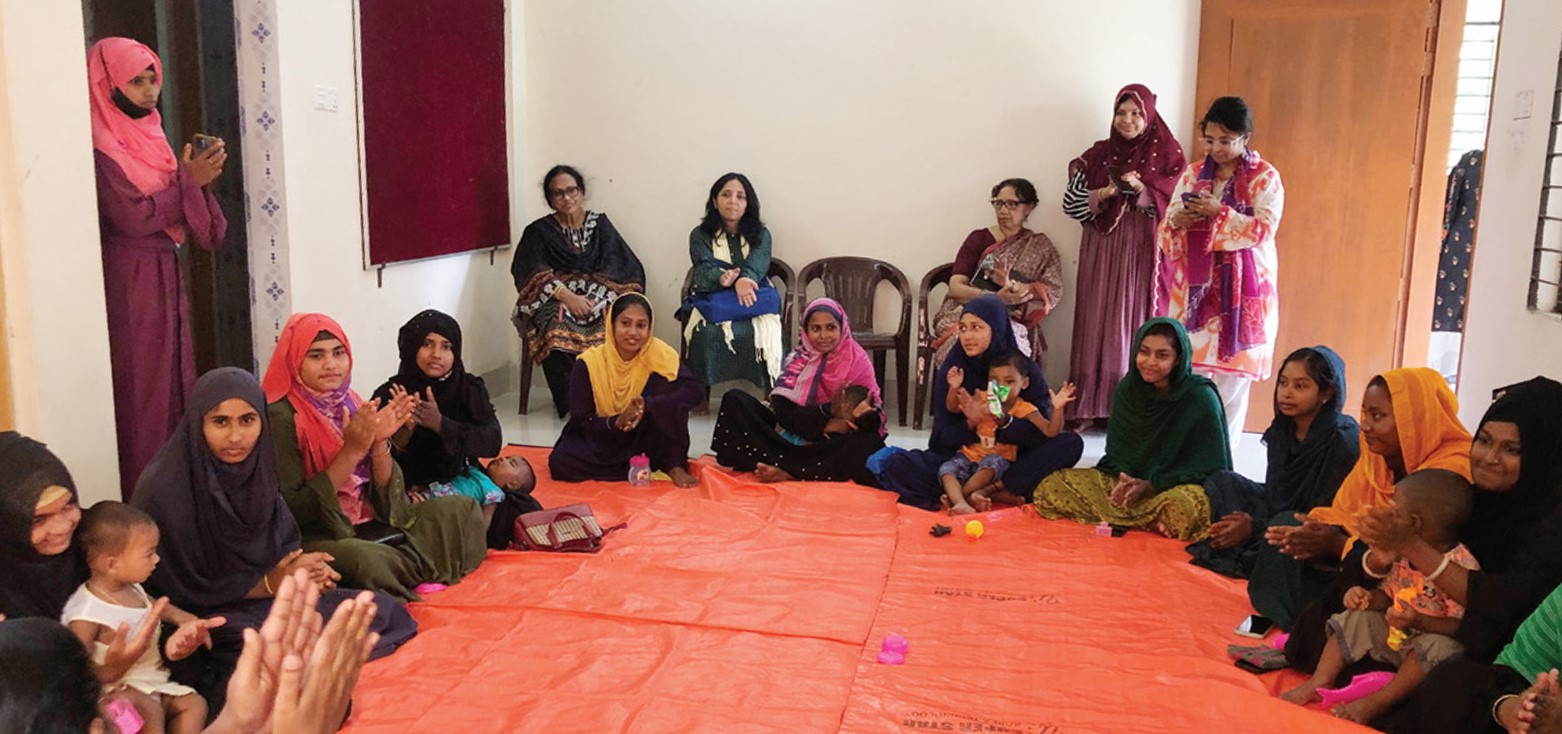
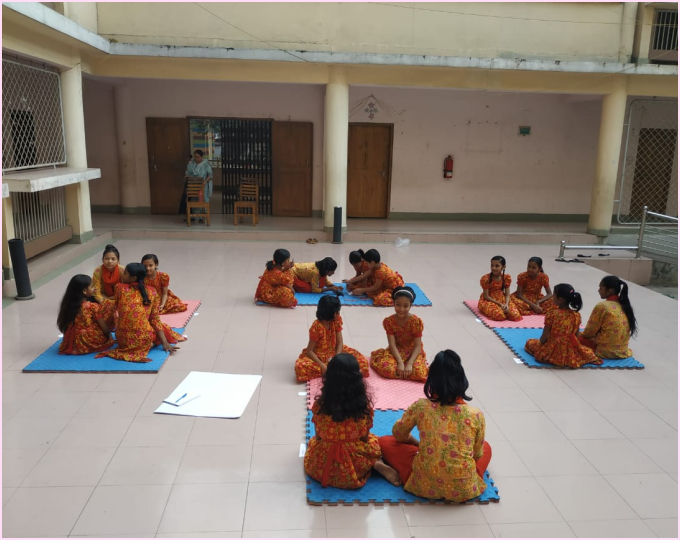
Water, sanitation, and hygiene (WASH) are imperative issues for infection prevention and disease control. To understand the existing resources and WASH situation, a participatory appraisal was conducted at Bauniabadh slum, Mirpur, Dhaka, Bangladesh, from February-March 2022, and June-July 2023. Social mapping, transect walk, and informal discussion were conducted to identify available resources in the community for maintaining WASH, and also understand the challenges related to these; explore the surrounding cleanliness, waste disposal, and drainage system. Most of the households (HHs) fetched water from the nearest supply stations. A few families did not treat drinking water for purification; the gas flow was not sufficient to boil drinking water most of the time. A number of HHs did not clean their water reservoirs regularly, resulting in odor in the supplied water. Regular garbage removal system was absent. WASH being a communal issue in slum setting, community engagement for
WASH management is strongly recommended.


Understanding water, sanitation, and hygiene situation through participatory appraisal in urban slum of Dhaka City
Related Resources
Communication Materials