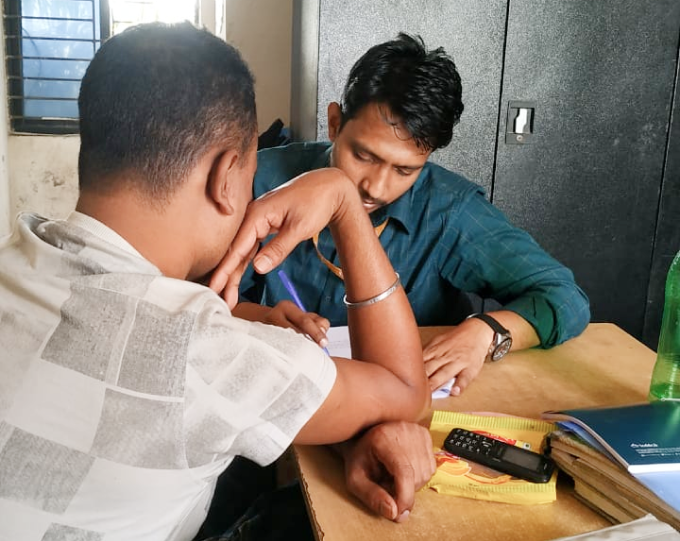
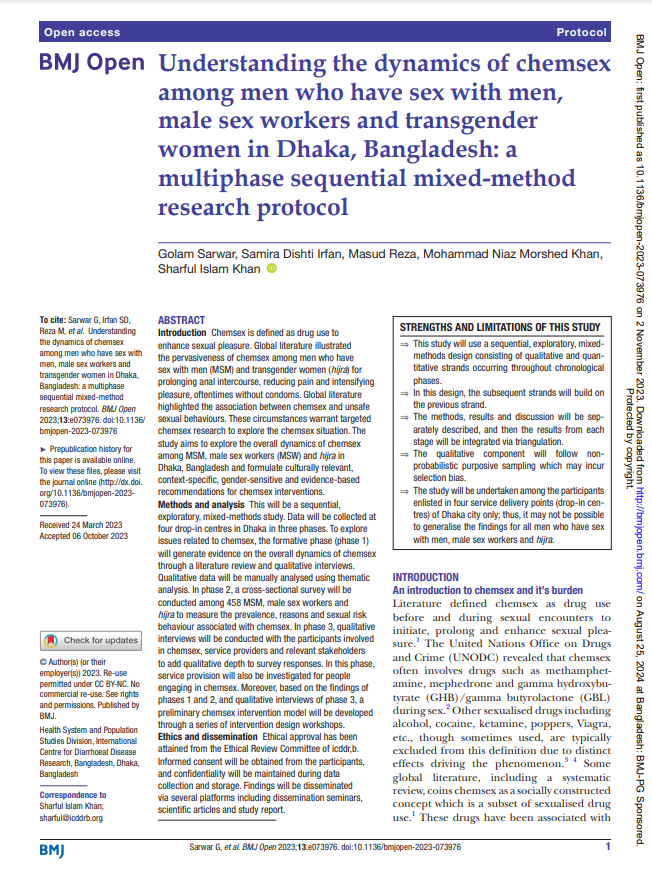
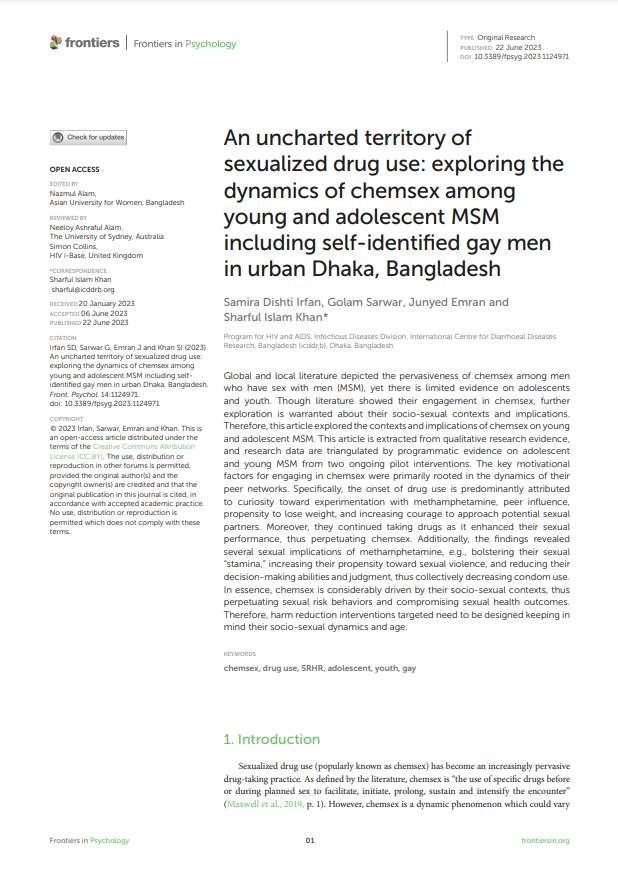
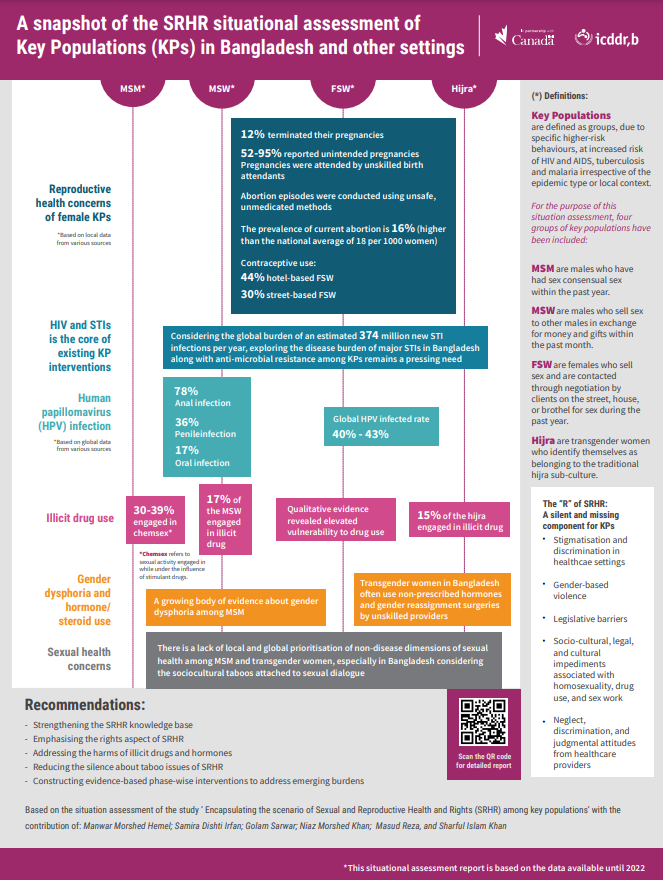
Chemsex entails the consumption of certain forms of sexualised drugs before and during sexual activities to heighten pleasure. The United Nations Office on Drugs and Crime (UNODC) has associated substances such as methamphetamine, mephedrone, and gamma hydroxybutyrate (GHB)/gamma butyrolactone (GBL) with chemsex practices. In an Asia-wide review, the prevalence of sexualised drug use among men who have sex with men (MSM) ranged from 3.6% to 91.2% (3), with varying rates of chemsex from 3.1% to 30.8%. Global literature on chemsex indicated adverse impacts, such as on physical, sexual, and mental health; on users' lives; and on risky sexual behaviour, such as condomless sex.
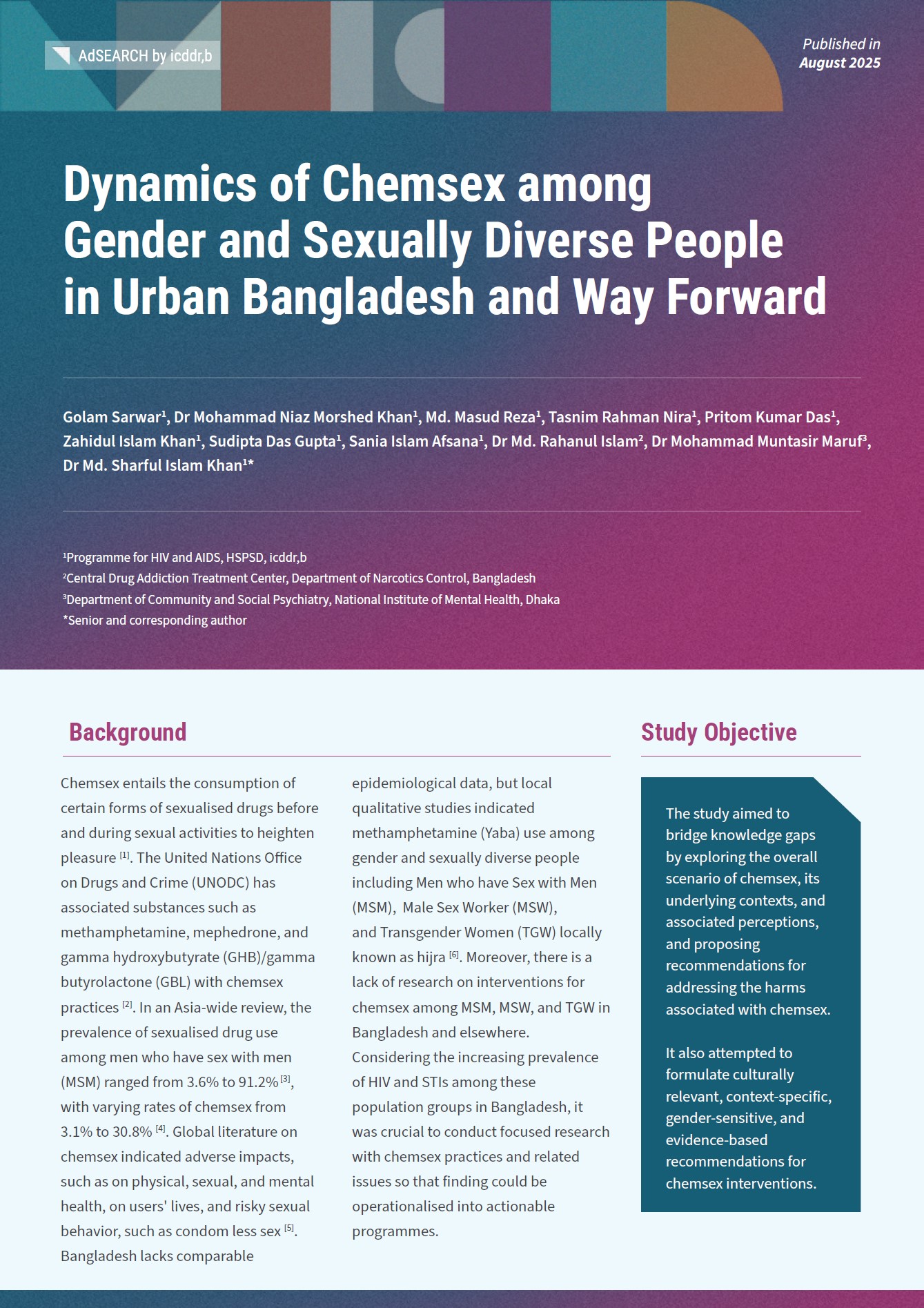

Dynamics of Chemsex among Gender and Sexually Diverse People in Urban Bangladesh and Way Forward
Related Resources

Related Studies
Community-Based Studies
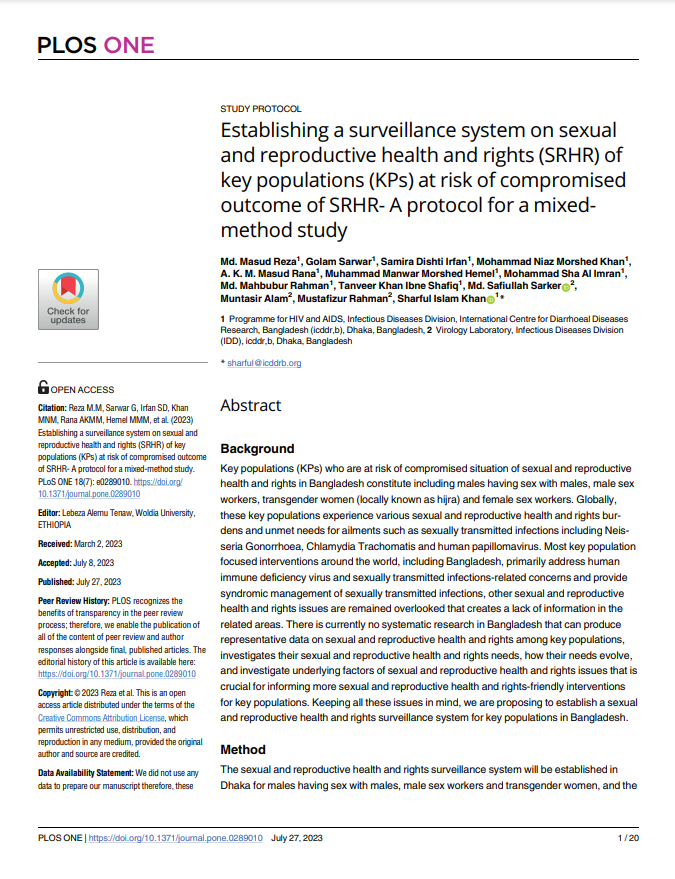
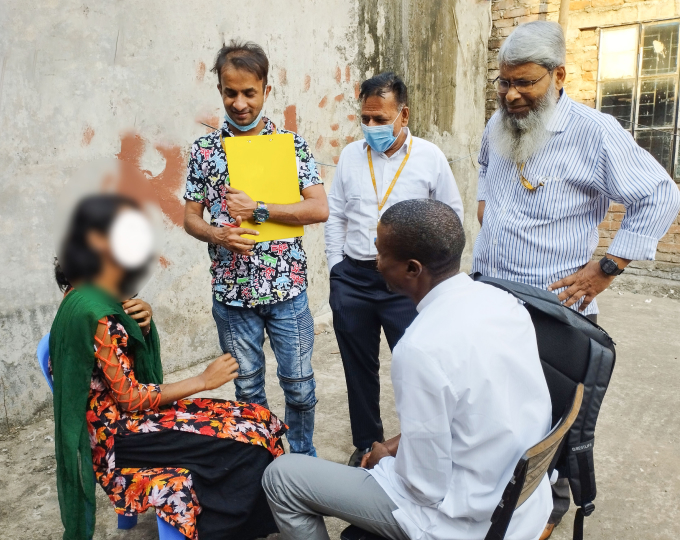
Establishing a surveillance system on SRHR of key populations (KPs) at risk of the compromised outcome of SRHR
Community-Based Studies
Psychological distress and sexual health concerns among gender and sexually diverse people: Developing a culture sensitive intervention model