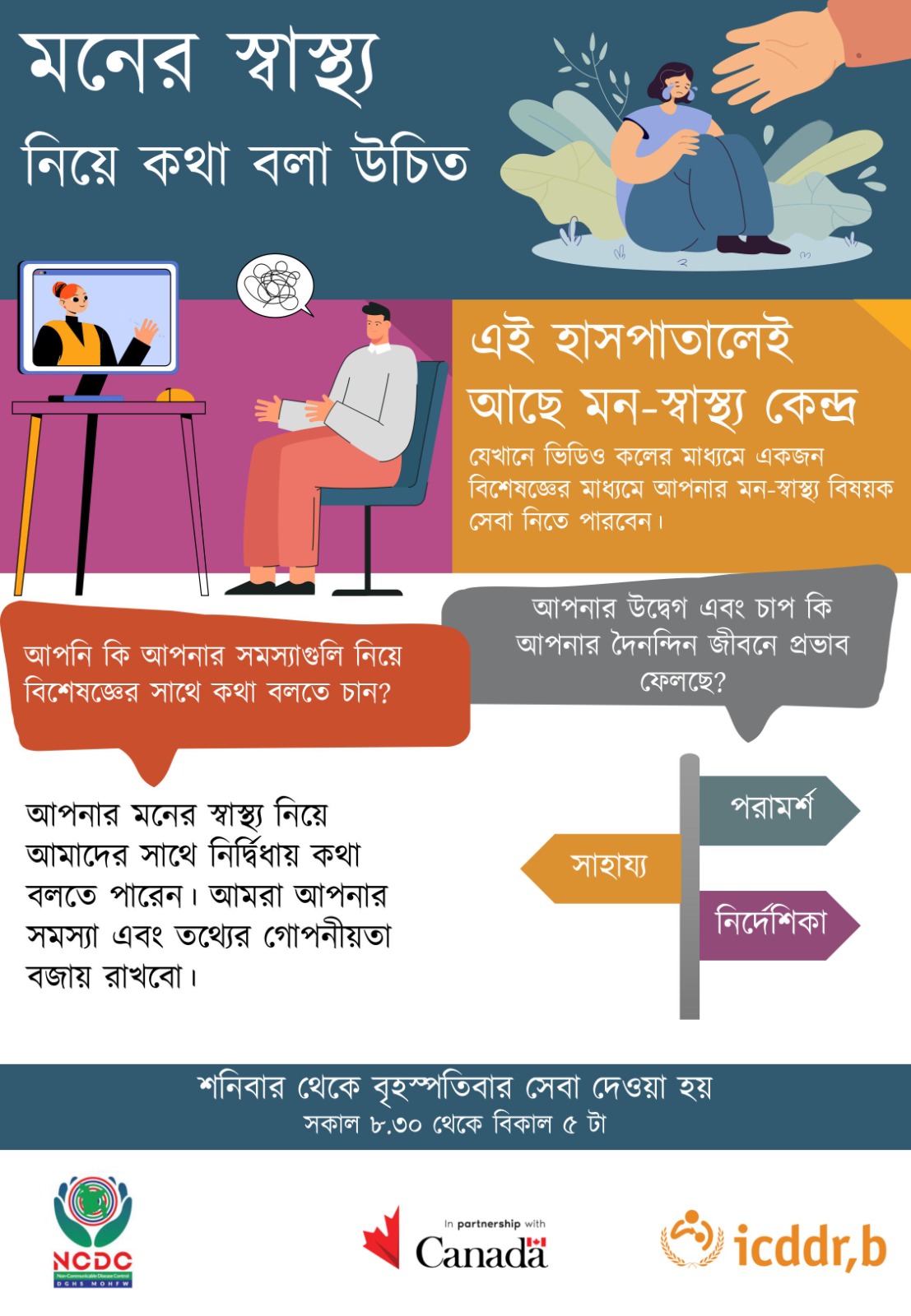
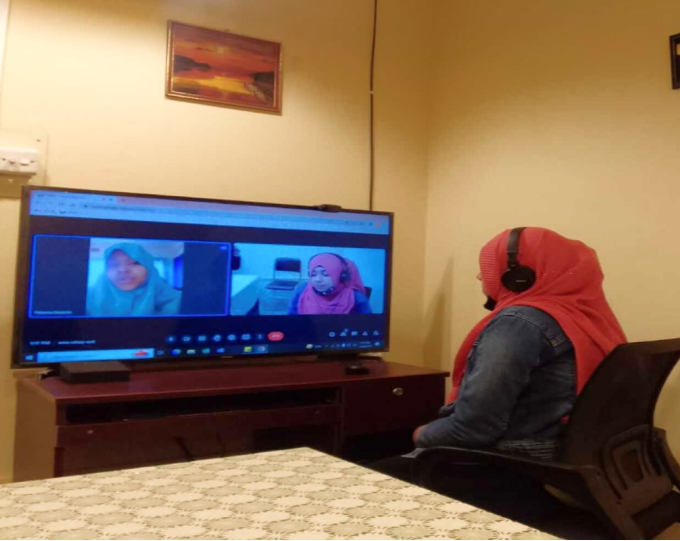
Mental health disorders pose a critical burden globally, 400 million incident and 1.1 billion prevalent cases; and in Bangladesh, 10.38 million incident and 24.05 million prevalent cases in 2023. Despite the mental health burden in Bangladesh, the majority of the people (> 90%) do not receive required services, due to the concentration of service providers in big cities, leaving rural and marginalized people disproportionately affected. Therefore, to address these barriers, the Non-Communicable Disease Control (NCDC) programme established tele-mental health services in government facilitated Wellbeing Centers at district and sub-district level. Thus, our study aimed to assess early implementation outcomes of the Wellbeing Center model.
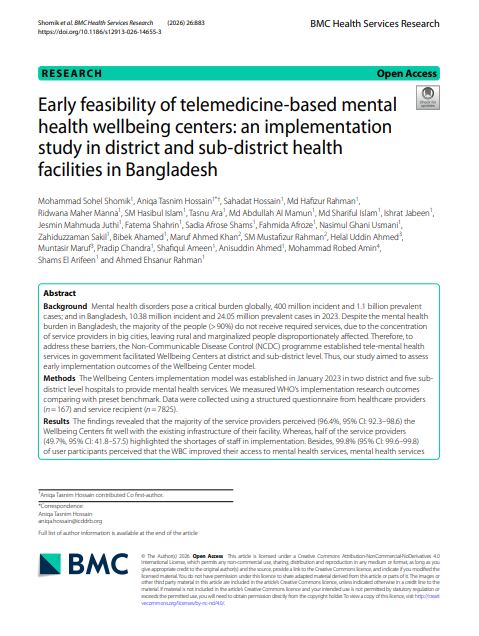

Early feasibility of telemedicine-based mental health wellbeing centers: an implementation study in district and sub-district health facilities in Bangladesh
Related Resources
Communication Materials
Communication Materials
Communication Materials
Communication Materials
Communication Materials
Communication Materials


Related Studies
Innovation Studies
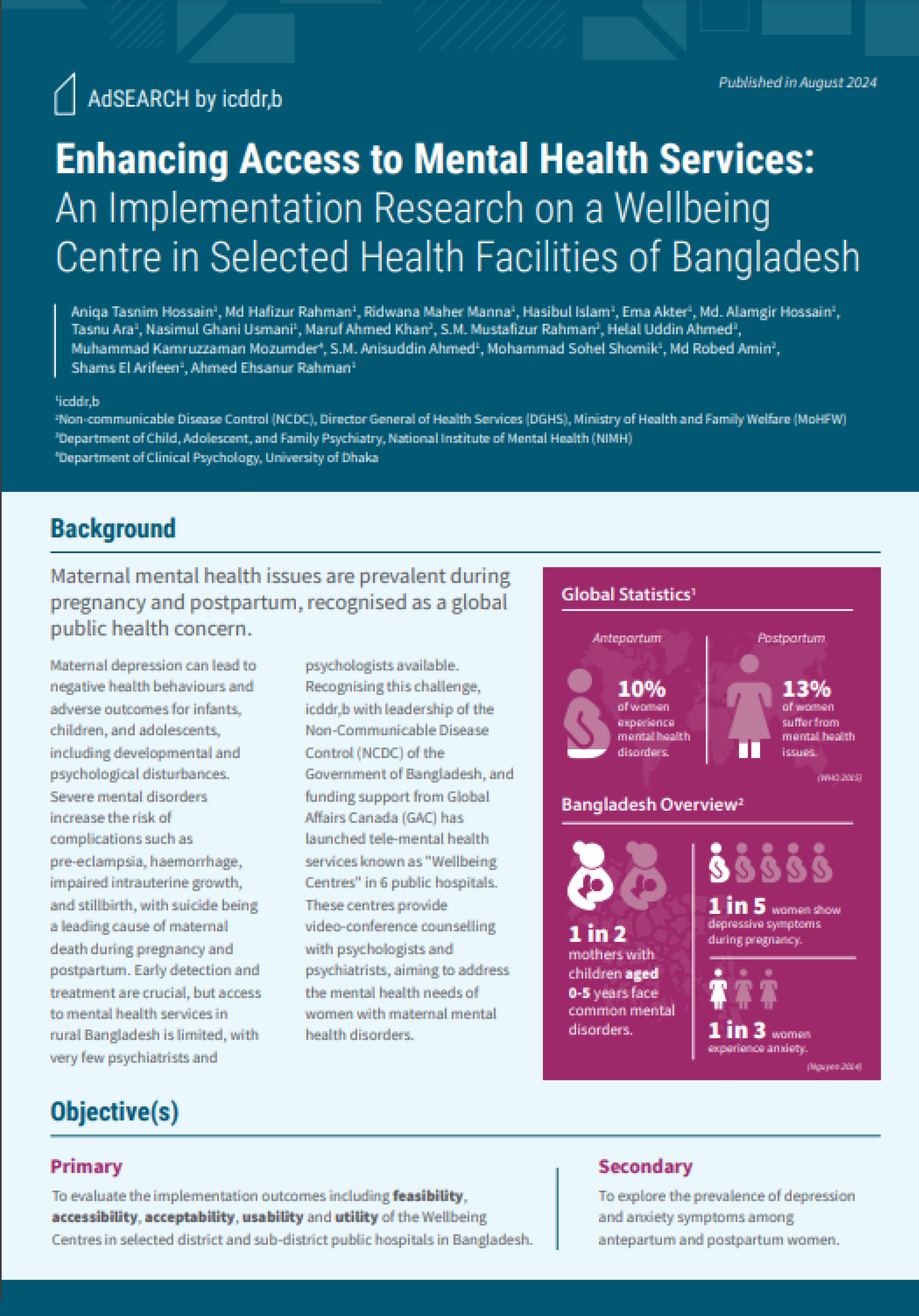
Introducing Well-being Corner for women during antepartum and postpartum period to increase access to mental health services: An implementation research in health facility
Innovation Studies
Design, Development and feasibility of Health advisors.com

Innovation Studies
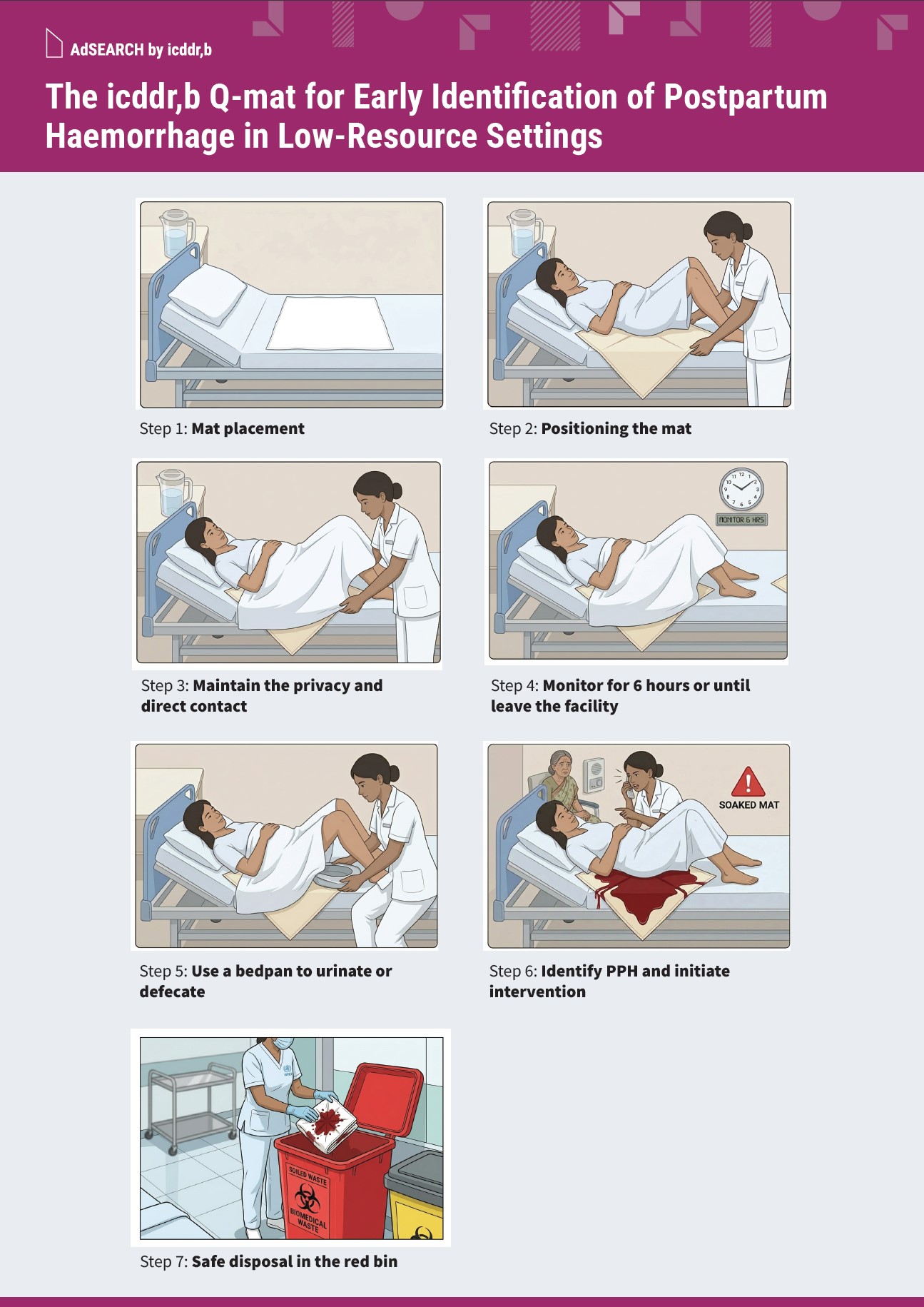
Implementation research on Q-mat in health facilities of sub-district level

Innovation Studies
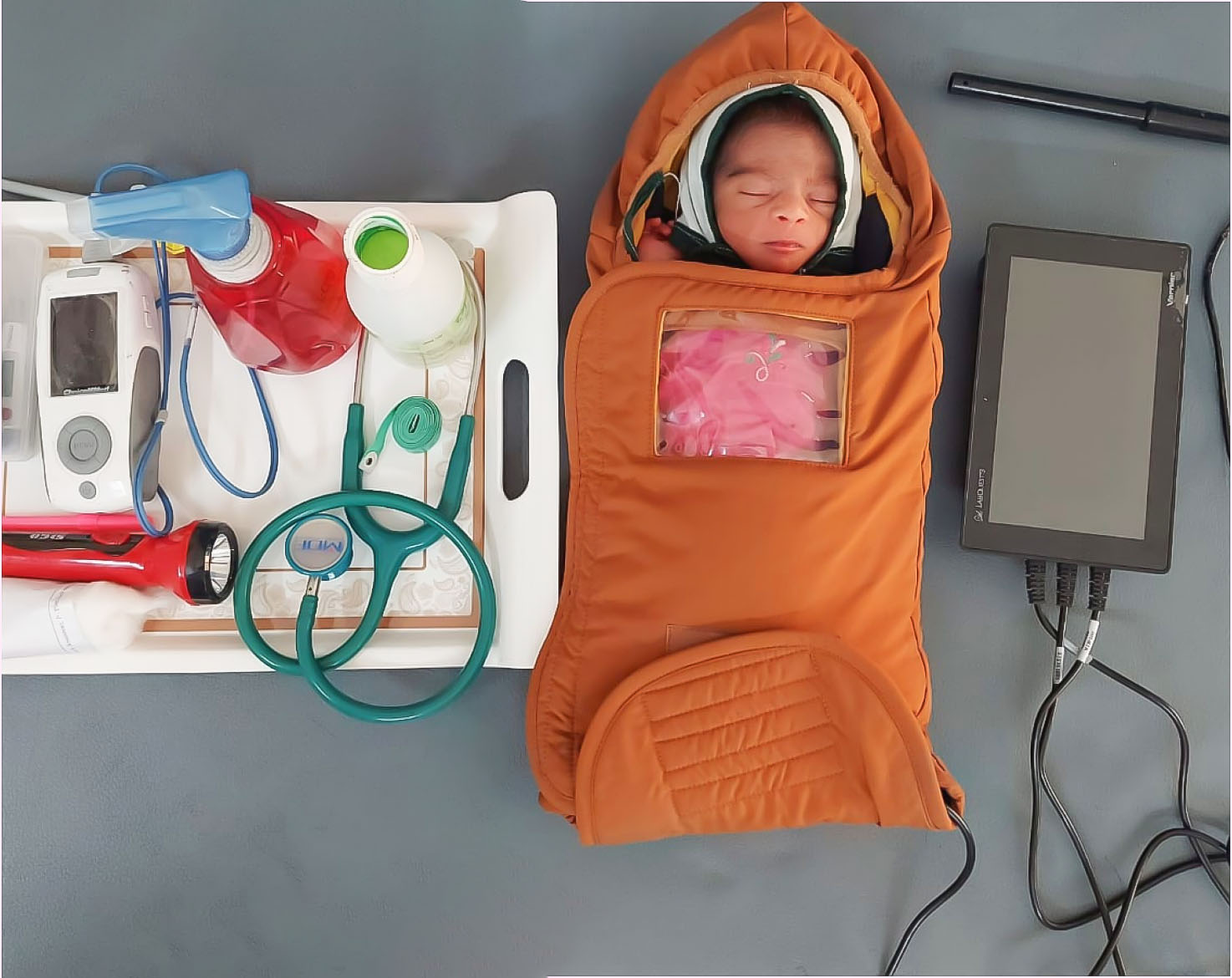
Assessing the Feasibility of Introducing Thermal Jacket in the Selected Public Healthcare Facilities of Bangladesh