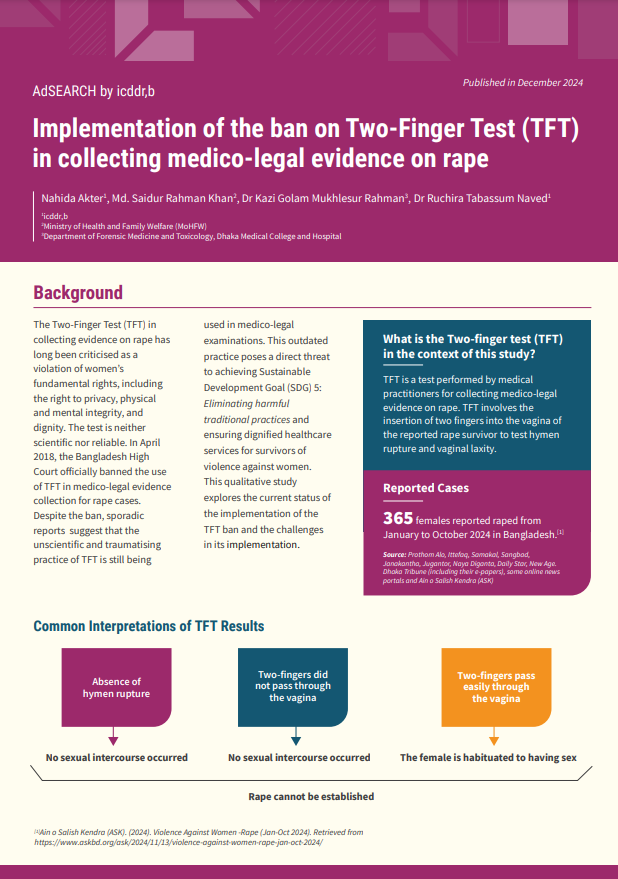

The use of the two-finger test (TFT) for collecting medico-legal evidence on rape has been recognised as a public health concern. It has been banned in many countries around the world. However, the scant evidence available on the implementation of this ban suggests its poor implementation. Continued use of TFT directly threatens the achievement of SDG 5 by compromising the quality of healthcare for rape survivors, negatively impacting their psychological health, bodily integrity, and chances of reporting and convicting the perpetrator(s). The current study assesses the implementation of the ban in Bangladesh, identifies gaps and suggests ways to improve the implementation of the ban.
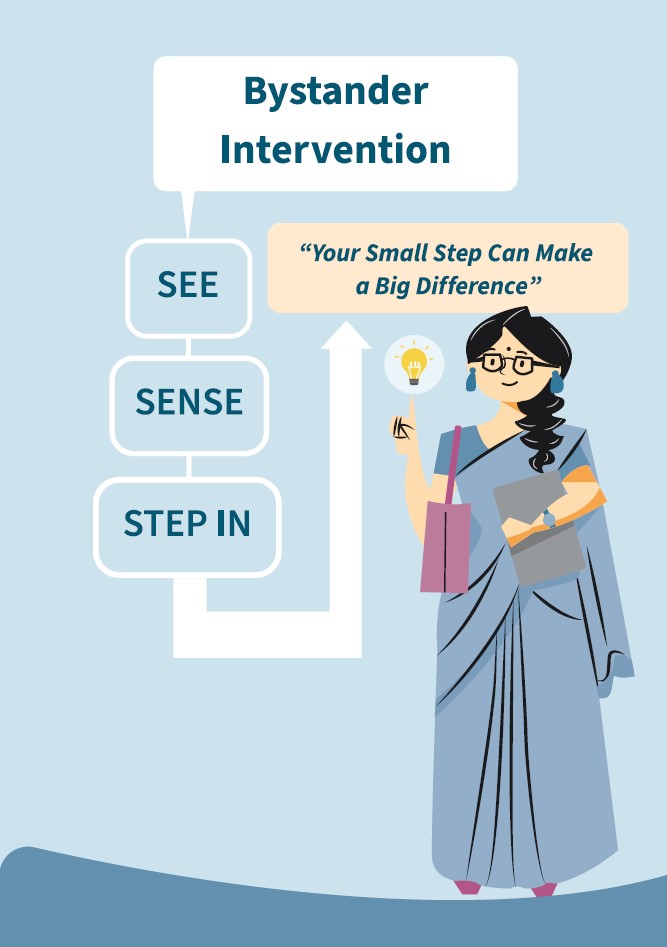
Communication Materials