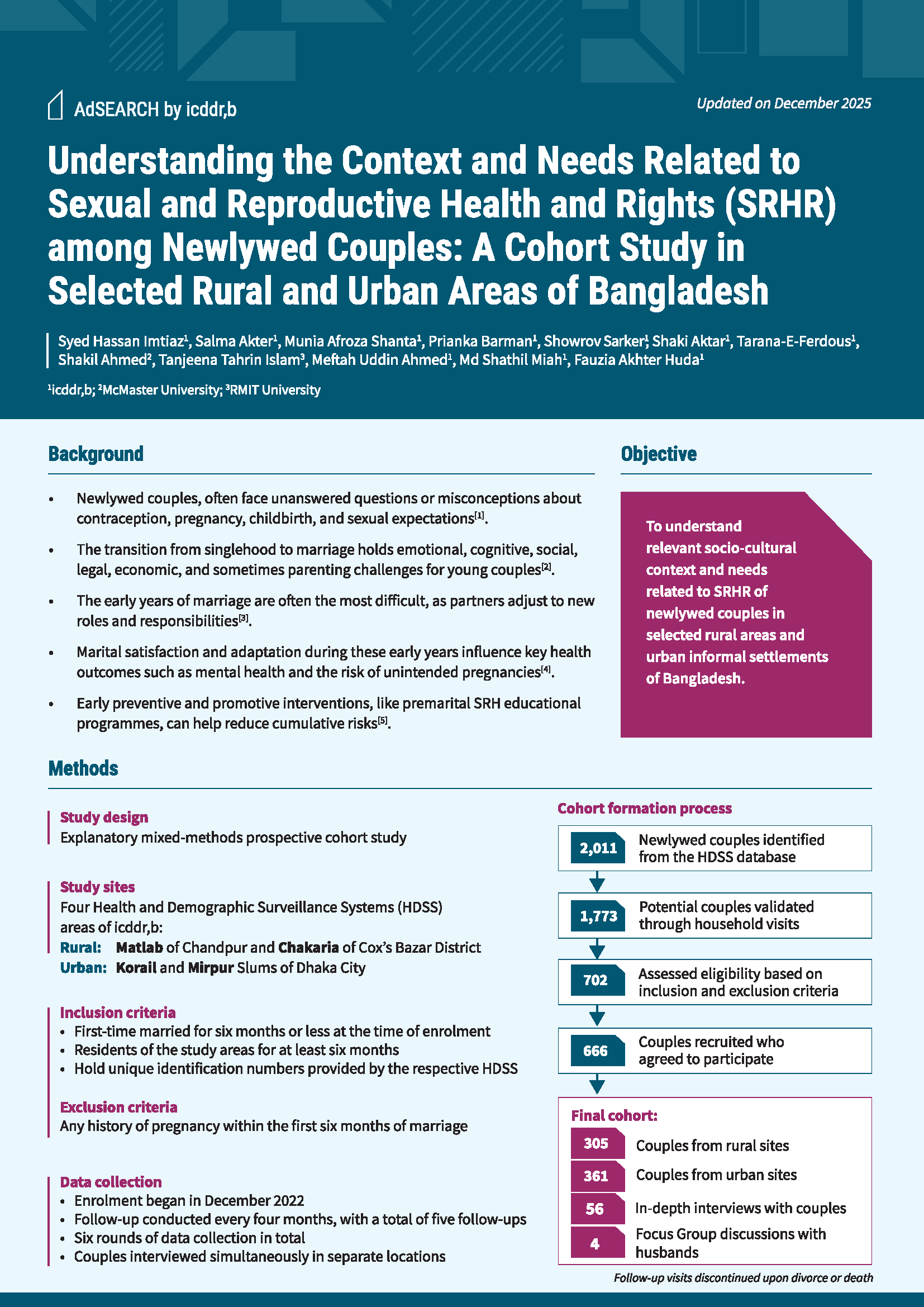

Sexual and Reproductive Health and Rights (SRHR) aim to enhance quality of life through safe sexual experiences, reproductive autonomy, and protection against gender-based violence. However, existing SRHR research and interventions in low- and middle-income countries like Bangladesh predominantly focus on women, often understating men and neglecting the nuanced contextual issues faced by married couples. This study contributes to filling this gap by examining SRHR dynamics among newlyweds in rural and poor urban areas of Bangladesh, especially focusing on marital satisfaction, fertility preferences, and post-marriage adaptation mechanisms.
Communication Materials